How to Choose a Beat: Matching Instrumentals to Your Flow
Browsing beat marketplaces can quickly become overwhelming. With thousands of tracks tagged with trending producer names and subgenres, it is easy to pick an instrumental simply because the melody sounds catchy on laptop speakers. However, an instrumental that sounds impressive on its own often turns out to be a nightmare to record over. If a beat is packed with competing lead synths, harsh mid-range counter-melodies, or erratic drum fills, your vocal delivery gets buried before the mix even begins. Learning how to choose a beat tailored specifically to your vocal range, delivery cadence, and artistic identity is the single most important skill for ensuring your next single sounds cohesive, commanding, and commercially competitive.
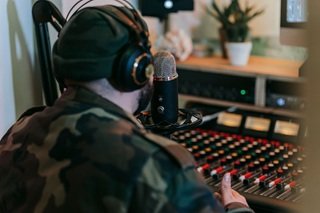
How to Choose a Beat: Selecting Instrumentals That Match Your Flow & Style
Every independent artist has experienced this frustration: you find an instrumental online that sounds like a platinum record. The synth lines are complex, the 808s rumble, and the beat knocks on your headphones.
You purchase a license, pull the file into your DAW, set up your microphone—and suddenly, nothing fits. Your lyrics feel rushed, your vocal tone clashes with the melody, and no matter how much EQ you apply, your voice sounds like it is fighting the production for survival.
Knowing how to choose a beat is not about finding the most elaborate production on the internet; it is about finding an instrumental that leaves a physical sonic pocket for your voice to occupy.
A truly great beat is not a finished piece of standalone music—it is an open canvas engineered to elevate a vocal performance.
By analyzing sonic space, calculating tempo dynamics, and matching musical scales to your vocal register, you can select instrumentals that bring out your best vocal performances with minimal friction.
1. The “Wall of Sound” Trap: Beware of Over-Produced Beats
The most common trap on online beat platforms is what audio engineers refer to as the “Wall of Sound.”
Many producers create beats designed specifically to catch a casual listener’s attention in the first five seconds of a social media clip. To make the beat sound “full” without a singer, they layer heavy piano chords, ambient vocal chops, bell counter-melodies, and distorted synth leads.
While this makes the beat fun to listen to in isolation, it leaves zero acoustic space for a vocalist.
[THE FREQUENCY SPECTRUM BATTLEGROUND]
 ├── 20 Hz - 250 Hz   : Sub-Bass, 808s, Kick Drum (The Low-End Foundation)
 ├── 300 Hz - 1 kHz   : Mud Range / Body (Vocal warmth, snare body, chord foundations)
 ├── 1 kHz - 4 kHz    : THE VOCAL PRESENCE POCKET (Where your lyrics live and breathe)
 └── 5 kHz - 20 kHz   : Hi-Hats, Air, Cymbals, Sibilance (Top-end sheen)
Your voice naturally lives between 1 kHz and 4 kHz—this is where human hearing perceives lyrical articulation, diction, and vocal presence.
If an instrumental already features aggressive brass stabs, screaming lead synths, or continuous vocal loops in this frequency bracket, your voice will clash directly with those instruments. When choosing a beat, listen for frequency pockets:
Are the melodic instruments filtered, tucked back, or panned to the sides?
Is there an open channel right down the center of the stereo field for your lead vocal?
Do the instruments step back during the verse sections to allow your storytelling to take center stage?
2. Dialing in BPM to Match Your Syllabic Density
BPM (Beats Per Minute) dictates the speed of the song, but more importantly, it dictates your syllabic density—how many words or syllables you can comfortably articulate within a single bar of music without losing your rhythmic pocket.
Artists often struggle with flow simply because they are trying to force a high-density cadence over the wrong tempo.
| Genre / Style | Typical BPM Range | Pacing & Syllabic Pocket | Best Vocal Delivery Approach |
| Dark TrapSoul / Modern R&B | 115 – 130 BPM (Half-Time: 58–65) | Wide, spacious, atmospheric | Elongated notes, melodic vibrato, airy falsetto runs. |
| Melodic Trap / Melodic Pain | 125 – 140 BPM (Half-Time: 63–70) | Balanced bounce with open bars | Auto-tune hooks, half-sung phrases, conversational cadences. |
| Modern Bouncy Trap / Florida Bounce | 140 – 165 BPM (Half-Time: 70–82) | Rapid rhythmic subdivisions | Triplet patterns, punchy staccato flows, dynamic ad-lib pockets. |
| Classic Boom-Bap / Lofi Hip-Hop | 85 – 98 BPM (Straight Time) | Tight, continuous, syncopated | Complex rhyme schemes, heavy syllable counts, story-driven bars. |
The Cadence Rule of Thumb:
If your lyrical style relies on intricate multi-syllabic rhymes or rapid-fire delivery: Choose tempos that leave breathing room between the snare and kick, or opt for half-time trap beats around 130–145 BPM where the snare hits squarely on the 3rd beat.
If your style relies on melody, emotion, and spacious vocal stacks: Choose half-time tempos around 115–125 BPM. This allows your vocal notes to ring out and decay naturally without being cut off by rapid hi-hat rolls.
3. Matching the Musical Key to Your Natural Vocal Tessitura
Singing or rapping off-pitch can ruin an otherwise great performance, but forcing your voice outside its natural tessitura (the vocal pitch range where your voice sounds most comfortable and resonant) creates physical strain and nasal delivery.
Every instrumental is produced in a specific musical key (e.g., C Minor, F# Major, A Minor).
[VOCAL TONE MATCHING]
 ├── High/Tenor Voice   ──> Thrives in deeper, lower-octave keys (D Minor, C Minor, E Minor)
 └── Deep/Baritone Voice ──> Thrives in higher keys (G Minor, A Minor, B Minor) for acoustic separation
Complementary Contrast: If you have a naturally deep, raspy baritone voice, rapping over a beat dominated by low-octave dark bass lines and muddy 808s will cause your vocal to blend into the mud. A beat with brighter high-end elements or a higher key will provide contrasting clarity.
Preventing Digital Tuning Artifacts: If you rely on real-time pitch correction plugins (like Auto-Tune or MetaTune), selecting a beat in a key that forces you to strain outside your natural octave will cause the retune speed to glitch, creating unwanted robotic warbles on transitional notes.
4. Evaluating Arrangement Architecture: Does the Beat Tell a Story?
A flat, looping instrumental produces a flat, repetitive song. When browsing beats, skip through the entire track to evaluate the arrangement architecture.
A commercially viable beat must have distinct emotional and structural shifts:
The Intro (4 to 8 Bars): Does it establish the mood and provide an identifiable sonic tag or melody that listener memory can latch onto?
The Verse Pocket (16 Bars): Do elements drop out? A high-quality beat will pull back the 808s, drop the secondary melodies, or filter the drums when the verse begins, handing full sonic authority to the vocalist.
The Pre-Chorus Build (4 to 8 Bars): Is there rhythmic tension? Listen for rising sweeps, snare rolls, or sudden silence that signals the listener to anticipate a major shift.
The Chorus Explosion (8 to 16 Bars): Does the beat expand? The hook should feel sonically wider and more energetic than the verse, giving your chorus maximum emotional impact.
If a beat loops the exact same melody and drum pattern for three minutes without dynamic drops or transitions, you will have to do all the heavy lifting with vocal layering and complex editing.
5. The “60-Second Mumble Test”
Never purchase an instrumental based solely on a passive listening session through laptop or smartphone speakers. Before checking out, apply the 60-Second Mumble Test:
Put on your studio headphones or AirPods.
Play the preview track from the producer’s store.
Do not try to write coherent lyrics. Instead, hum, mumble cadences, and test melody shapes over the verse and hook sections.
Evaluate: Did a natural vocal melody present itself within the first 30 seconds? Could you find a pocket without stumbling over the snare? Did you feel physically strained trying to match the energy of the track?
If you cannot find a vocal melody or bounce within one minute of casual humming, the beat is clashing with your natural songwriting intuition. Move on.
Why Multitrack Stems Provide the Ultimate Creative Flexibility
Even when you find a beat that matches your style, you might realize during your recording session that a specific counter-melody fights your chorus hook, or an open hi-hat pattern distracts from your verse cadence.
If you purchase a standard two-track MP3 or WAV lease, you are locked into the producer’s mixed stereo file. You cannot turn down an instrument or remove a conflicting sound.
This is why upgrading your license to multitrack WAV stems is the ultimate insurance policy for independent creators.
When you secure stems, you receive every kick, snare, 808, synth, and atmospheric texture as an isolated, high-resolution audio channel. If a bell melody fights your vocal presence in the hook, your audio engineer can simply mute that bell during the chorus and bring it back during the bridge—tailoring the beat around your performance rather than forcing your voice to conform to a static loop.
Explore the strategic engineering benefits of individual stems in our detailed guide on What Are Beat Stems? Why Trackout Files Are Essential for Artists.
Discover Production Engineered for Vocalists
At Prod By DSG, our entire instrumental catalog is composed and mixed with the vocalist in mind. We deliberately carve out the critical 1 kHz to 4 kHz frequency pocket, balance sub-bass weight, and construct dynamic arrangement drops that make writing hooks effortless.
Whether you need bouncy Florida bounce patterns, melodic trap pockets, or dark, moody TrapSoul atmospheres, our store delivers pristine, uncompressed 24-bit WAV files and complete multitrack stem trackouts.
Explore our verified catalog today and find the exact production that complements your flow, elevates your delivery, and gives your next single the commercial foundation it deserves.
Frequently Asked Questions
Q: Can I change the tempo or key of a beat after buying a lease?
A: If you buy a stereo MP3 or WAV file, shifting the tempo or pitch more than 2–3 semitones in your DAW will introduce digital artifacts and transient distortion. However, if you have the multitrack WAV stems, you can time-stretch drum and melodic elements cleanly or pitch individual melodies without degrading the drum transients.
Q: Should I write lyrics first or pick the beat first?
A: Most modern recording artists pick the beat first or write to a rough reference tempo. Writing to a specific instrumental ensures that your cadence, rhyme pockets, and emotional inflections naturally lock into the groove of that production. Writing lyrics in a notebook without an instrumental often leads to awkward phrasing when trying to force those words onto a grid later.
Q: How do I know what musical key a beat is in?
A: Professional beat marketplaces and producer storefronts display the BPM and Musical Key directly alongside the track title (e.g., “140 BPM – C Minor”). If the key is not listed, you can drop the instrumental file into free key-detection tools or plugins like Mixed In Key or Tunebat.
📚 Related Blueprints & Music Business Guides
Elevate your technical execution and master digital distribution with our foundational production resources:
Avoid Audio Bottlenecks: Understand how uncompressed audio formats preserve dynamic headroom inside MP3 vs WAV Spotify: Which Beat License Do You Actually Need?.
Capture Studio-Grade Takes: Set up your recording environment to capture clean, reflection-free vocals with our guide on Home Vocal Recording Techniques: How to Get Studio Quality in a Bedroom.