Spotify Bot Playlists: How to Spot Fake Playlists and Avoid Account Bans
Waking up to see your daily stream counter spike from double digits into the thousands feels like an overnight breakthrough—until you realize your track was added to an unsolicited third-party playlist without your consent. In an effort to eliminate artificial streaming fraud, DSPs and digital distributors now issue monetary fines, delete songs, and permanently ban artist profiles caught receiving illegitimate traffic. Knowing how to detect spotify bot playlists before their artificial streams contaminate your algorithmic profile is essential to protecting your releases and preserving your distributor standing.
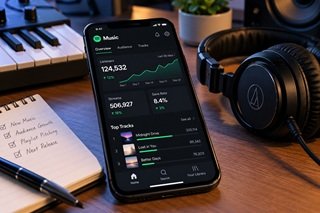
Spotify Bot Playlists: How to Spot Fake Playlists and Avoid Account Bans
Seeing your stream count explode overnight should be a milestone in your music career.
For hundreds of independent rappers and singers, however, an unexpected spike of 5,000 streams from a playlist called “Top Rap Hits 2026” or “Late Night Vibez” marks the beginning of an operational disaster.
Two weeks later, the notification arrives in your inbox: your distributor has issued an artificial streaming warning, deducted penalty fees from your payout balance, or pulled your single down from Spotify entirely.
Streaming platforms utilize machine-learning fraud detection systems that flag non-human listening behavior with zero tolerance. If automated bots flood your record with repetitive, server-generated plays, the platform does not care whether you paid for the bot service or were added involuntarily by a scammer seeking leverage.
Understanding how to spot spotify bot playlists, audit suspicious curators, and insulate your catalog from automated strikes is critical to keeping your music live and monetized.
1. The Cost of Bot Streams: Fines, Strikes, and Algorithmic Poison
Streaming fraud is no longer met with a simple slap on the wrist. When artificial traffic touches your song, three distinct penalties trigger across the distribution ecosystem:
[THE ARTIFICIAL STREAMING DOMINO EFFECT]
 Bot Farm targets your release (Automated script / loop plays)
       │
       ▼
 Spotify filters the plays & levies a monetary fee per track on the distributor
       │
       ▼
 Distributor passes the fine to YOU ($10 to $45+ fee deducted from balance)
       │
       ├── Track is stripped of algorithmic placement (Release Radar / Radio dead)
       ├── Track is delisted from Spotify and Apple Music
       └── Repeat flags trigger complete termination of your distributor account
A. Direct Financial Penalties
Major platforms impose financial penalties on digital distributors for every release flagged with high percentages of artificial streams. Distributors pass these fees directly down to you, deducting charges between $10 and $45 per flagged track directly from your accrued earnings.
B. Algorithmic Destruction
Spotify’s recommendation engine relies entirely on user behavior data: Save Rate, Completion Rate, and Repeat Listens.
Bots do not save songs, they rarely listen past the 31-second monetization threshold, and they do not add tracks to personal user libraries.
When thousands of bots skip your song after 32 seconds, Spotify’s algorithm assumes human listeners dislike your music. Your track gets buried, disqualifying you from organic discovery features like Discover Weekly and Radio.
C. Total Catalog Blacklisting
Multiple strikes through distributors like DistroKid, TuneCore, or UnitedMasters lead to immediate account termination. Once banned for fraud, your artist profile, payment history, and ISRC registry can be permanently blacklisted across all partner DSPs.
To ensure your music is uploaded through a platform that handles catalog holds transparently, read our breakdown of the Best Music Distributor for Leased Beats: DistroKid vs TuneCore vs UnitedMasters.
2. Anatomy of a Bot Farm: How Fake Playlists Operate
Bot playlist creators operate automated server networks running “headless” browser instances or emulated Android environments. These servers cycle through thousands of free or compromised Spotify accounts, running automated playback scripts designed to generate fraudulent royalty pools.
[HOW THE BOT PLAYLIST EXTORTION SCAM WORKS]
 Scammer builds a playlist with 40,000 fake/botted followers.
       │
       ▼
 Scammer scrapes fresh releases from independent artists via Spotify API.
       │
       ▼
 Scammer adds your song to the playlist WITHOUT asking you.
       │
       ▼
 Scammer sends you an Instagram DM or email:
 "Your song is trending on our playlist! Pay $30 on PayPal to keep it in the Top 5."
       │
       ├── IF YOU PAY: You fund a bot network that gets your song banned.
       └── IF YOU IGNORE: You still get hit with bot streams unless reported immediately.
The curators behind these lists do not care about music curation. They use fake follower numbers as bait to sell guaranteed placement spots on Fiverr, Instagram DMs, or sketchy submission portals.
3. Five Dead Giveaways of a Fake Spotify Playlist
Before paying for third-party playlist consideration or celebrating an unsolicited add, run the list through this 5-point audit:
1. Abnormal Stream-to-Follower Ratios
A legitimate playlist with 10,000 followers rarely generates 10,000 streams in 24 hours. Human beings listen sporadically, shuffle tracks, or play parts of a list.
If a playlist has 5,000 followers but delivers 4,500 daily streams to your song with zero organic variance, it is being farmed by an automated loop script.
2. The “Server Farm City” Red Flag
Inside Spotify for Artists, navigate to your track’s Audience tab and check your top listening cities.
If your primary audience is not coming from major music-consuming hubs (like Chicago, London, Los Angeles, or Atlanta), but instead shows massive clusters in data center cities, you are being botted.
Top Bot Farm Hubs to Watch For:
Ashburn, Virginia, US (Major Amazon Web Services / cloud data center hub)
Helsinki, Finland (Massive concentrated VPN and proxy farm centers)
Dublin, Ireland (European cloud server clusters)
Council Bluffs, Iowa, US (Major Google server facilities)
3. Flatline Growth Curves (The “Shark Fin” Graph)
Healthy, human-curated playlists grow gradually as real listeners share the link.
Using analytical tools like Chartmetric or Artist.Tools, look at the playlist’s historical follower graph:
Organic Growth: A steady, jagged, upward-sloping trend line.
Bot Growth: A vertical spike of 30,000 followers in a single 48-hour period, followed by months of completely flat or slightly declining numbers.
4. Disconnected Artists and Genre Salad
Examine the songs surrounding your track. A legitimate dark R&B playlist will feature artists with similar production, mood, and genre aesthetics.
Fake playlists prioritize whoever pays them. If you see an ambient TrapSoul record sitting directly between a German speed-metal song, an amateur hyperpop track, and a low-fi acoustic guitar demo, the list is uncurated payola generated purely by bots.
5. Contact Info Demanding Off-Platform Payment
If the playlist description contains lines like:
“DM @promo_guru on IG for submissions”
“Send $25 to this PayPal for immediate permanent add”
“WAV / MP3 submissions via WhatsApp”
This directly violates Spotify’s Terms of Service regarding commercial payola. Playlists advertising paid placement guarantees are prioritized targets for Spotify’s deletion sweeps.
Organic Playlists vs. Bot Farm Playlists
| Metric / Attribute | Organic Curated Playlist | Bot Farm Playlist |
| Follower Growth | Gradual, steady, occasional viral bumps | Sudden vertical spikes (+20k overnight) |
| Listener Locations | Major metropolitan areas (LA, NYC, London) | Cloud server hubs (Ashburn, Helsinki) |
| Save / Add Rate | Typically 3% to 10% save-to-stream ratio | Less than 0.5% (Streams with zero saves) |
| Track Selection | Cohesive genre, vibe, and production quality | Random genres thrown together without logic |
| Submission Method | Verified portals (SubmitHub, Groover, direct email) | WhatsApp, Fiverr, Telegram, or paid PayPal DMs |
| Stream Duration | Realistic varied completion times | Uniform, robotic 31-to-35 second drop-offs |
4. What to Do If a Bot Playlist Adds Your Song
If you wake up and discover your song on a verified bot playlist that you did not authorize, take immediate documentation steps to protect your account.
[THE BOT EMERGENCY RESPONSE CHECKLIST]
 Step 1: TAKE SCREENSHOTS IMMEDIATELY
         Capture your Spotify for Artists dashboard showing the playlist name,
         the curator profile, the sudden spike, and the suspicious city data.
            │
            ▼
 Step 2: REPORT THE PLAYLIST TO SPOTIFY FOR ARTISTS
         Open Spotify for Artists Support chat. Submit the playlist URL and
         state: "My track was added to this unauthorized list without my consent."
            │
            ▼
 Step 3: FILE A PROACTIVE TICKET WITH YOUR DISTRIBUTOR
         Email DistroKid/TuneCore support with your screenshots BEFORE they flag you.
         State: "I detected third-party artificial streaming activity on my ISRC and
         have already reported the offending playlist to Spotify."
By creating a timestamped paper trail with both Spotify and your distributor, you prove that you did not purchase the traffic.
If Spotify issues an automated takedown request a month later, your support ticket serves as concrete evidence to reverse the strike and waive any penalty fees.
Understanding the legal and administrative ownership of your tracks makes handling these disputes straightforward; review our essential guide on How Do Beat Leases Work? The Complete Guide to Stream Limits & Rights.
5. Legitimate Ways to Build Streams Without Bot Traps
Avoiding fake playlists does not mean you are locked out of digital promotion. Legitimate, algorithm-friendly methods consistently drive real human listeners to your music:
1. Direct-to-Spotify Meta Ads
Run targeted 15-second video ads on Instagram and TikTok using Meta Ads Manager. Direct real listeners directly to your Spotify profile via a clean smart link (such as ToneDen or Feature.fm).
Because the traffic consists of genuine users browsing social media, your save rates, playlist adds, and completion rates will remain authentic, signaling to Spotify’s algorithm to trigger organic Radio and Discover Weekly support.
2. Verified Third-Party Submission Platforms
Use transparent submission platforms that enforce strict curation guidelines and ban curators running bot farms:
SubmitHub: Curators are audited regularly; feedback is mandatory.
Groover: Reliable European and global tastemaker submission platform.
DailyPlaylists: Offers free tier submissions to vetted community curators.
3. High-Paced Single Rollouts
Rather than burning your promotional budget on risky third-party playlist promoters, funnel your resources into a steady release cadence. Dropping high-quality singles on a fixed schedule triggers Spotify’s native algorithmic engines automatically without risking account flags.
Learn how to stack algorithmic momentum legally in our guide on the Waterfall Release Strategy: Why Indie Artists Should Stop Dropping Albums.
Release Confidently with Production Built for the Long Game
Algorithmic longevity starts with making music that holds listener attention. If your song lacks clean sonic depth, listeners will skip the track regardless of how they discovered it.
At Prod By DSG, our entire production catalog is arranged and mixed with vocal dynamics at the forefront.
We engineer every beat with open vocal pockets, spacious arrangements, and pristine 24-bit WAV headroom, ensuring your final master sounds clear, impactful, and competitive alongside major-label streaming releases.
Whether you are hunting for dark TrapSoul textures, melodic trap drums, or late-night atmospheric bounce, our catalog delivers production that keeps listeners engaged from the opening bar through the final hook.
Explore our verified beats today, protect your brand with clean audio foundations, and build a release catalog that commands genuine human engagement.
Frequently Asked Questions
Q: Can my Spotify profile get deleted if someone else bots my song to sabotage me?
A: Spotify will rarely delete an entire artist profile on a first-time bot attack, but they will frequently remove the specific track and strip its stream count. If you proactively document the suspicious activity and report the playlist to Spotify for Artists support as soon as it appears, your profile will remain safe from punitive bans.
Q: Does Spotify remove botted streams from my total public play count?
A: Yes. Spotify regularly runs automated auditing sweeps that purge artificial plays from public counters. It is common for botted tracks to lose tens of thousands of streams overnight once Spotify identifies and wipes the offending server network.
Q: Are Fiverr music promotion gigs safe for Spotify playlisting?
A: Almost universally, no. Any service advertising “Guaranteed 10,000 streams” or “Placement on top-ranked playlists for $10” relies on bot farms. Genuine playlist curation cannot guarantee stream numbers, as human listener engagement is impossible to predict accurately.
📚 Related Blueprints & Release Guides
Protect your career and optimize your music business foundations with our essential studio guides:
Avoid Distributor Rejections: Learn how to set up metadata and avoid copyright verification holds in Best Music Distributor for Leased Beats: DistroKid vs TuneCore vs UnitedMasters.
Understand Legal Protections: See how pre-existing leases protect your songs from takedowns in What Happens If Someone Buys Exclusive Rights to a Beat You Leased?.
🎵 Looking for production for your next release?
Browse our latest catalog of TrapSoul, Dark R&B, and melodic trap instrumentals—mixed with open vocal pockets, clean headroom, and instant stem downloads.